Monday, October 7, 2013
When I least deserve it
"Love me when I least deserve it because that's when I really need it"-Swedish Proverb

Sunday, October 6, 2013
Dance
https://www.google.com/logos/2011/graham11-hp.html#
May 11, 2011
This is the post that ran from Martha Graham Dance Company's website (marthagraham.org) when we launched our animated doodle.
How do you fit seven decades of American innovation into 15 seconds? That was the challenge when Google asked us to collaborate on a Google Doodle to celebrate Martha Graham’s birthday.
Martha Graham (1894–1991) is known as one of the great creative minds of the 20th Century, often compared with such greats as Picasso, Einstein, and Stravinsky because she made such radical change through the power of her discoveries. In the 1920s and 30s she created a completely new style of dancing and revolutionized dance and theater worldwide. Many of Graham’s groundbreaking ideas are referenced in the five dancing figures of the Martha Graham Google Doodle. Here are just a few clues and links to help you decipher the Doodle.
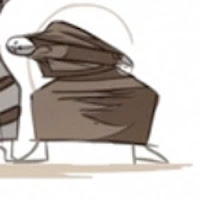 | The Doodle begins with the shrouded figure from Lamentation, Graham’s signature solo from 1930. Then radical, and now iconic, the solo contains the seeds of Graham’s revolution – from the gutsy, torso-driven movement to the stark, unadorned emotion and her desire to “chart a graph of the heart” with her dances. The innovative costume, a tube of stretchy wool, accentuates the torque and pull of the movement, becoming the sculptural evocation of grief itself. |
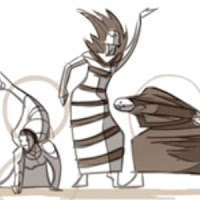 | The dancer then sweeps upright with an insouciant flip of the hair and becomes the essence of Satyric Festival Songfrom 1932. In this solo, Graham mocked her own serious reputation (gained through works such as Lamentation) and took inspiration from the clown figures used in Native American ritual. This figure represents the many masterpieces Graham created that grew out of her love of the unique space, rhythms, and culture of the American southwest. |
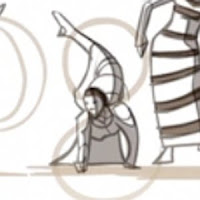 | With a spin onto the knees and a reach forward, the dancer brings us the joy and reverence for the earth from the Bride in Appalachian Spring. One of Graham’s most beloved works, the ballet was created in 1944. Graham and her collaborators, the composer Aaron Copland and the sculptor Isamu Noguchi, considered the work to be their contribution to the war effort. The Bride figure evokes Graham’s deep American roots, her remarkable relationship with American art and music, and her genius at creating works that spoke of real human concerns. |
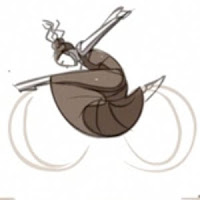 | The Bride is followed by a ferocious jump, the dancer’s torso flung forward, hovering in a famous Graham “contraction”. This is one of the “Daughters of the Night,” from the chorus of Night Journey, premiered in 1947. She calls up the masterworks Graham created by twisting classic tales from Greek drama into searing contemporary narratives. Night Journey is also the ultimate example of Graham’s revolutionary manipulation of time on stage. In it, the story of Oedipus unfolds through flashback and memory in the mind of his mother and wife, Jocasta. |
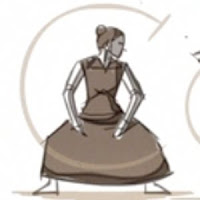 | The high kick with a sweep of the skirt and the determined finish – feet planted firmly, head erect and focused – complete the Doodle with the young woman fromFrontier, another seminal solo from 1935. Frontier reminds us of Graham’s reverence for individualism and self-empowerment and of her unquenchable “appetite for the new”. She created 181 dances in the course of her life, constantly forging new frontiers in American art until her death at age 96 in 1991. The dance company she launched in 1926 continues to delight audiences around the world with performances of the great Graham masterworks. https://www.google.com/doodles/martha-grahams-117th-birthday |
Who’s responsible? Initial Concept/Art Direction was by Doodler, Mike Dutton. Ryan Woodward created the animation. He was inspired by Blakeley White-McGuire, a principal dancer with the Martha Graham Dance Company, dancing a phrase of iconic Graham moves designed by Janet Eilber, Artistic Director of the Martha Graham Center of Contemporary Dance.
Saturday, October 5, 2013
Between the Lines
http://www.youtube.com/watch?v=aX1N42EQZLw
SARA BAREILLES
Between The Lines Lyrics
Time to tell me the truth
To burden your mouth for what you say
No pieces of paper in the way
'Cause I can't continue pretending to choose
These opposite sides on which we fall
The loving you laters if at all
No right minds could wrong, be this many times
My memory is cruel
I'm queen of attention to details
Defending intentions if he fails
Until now, he told me her name
It sounded familiar in a way
That I could have sworn I'd heard him say it
Ten thousand times, oh, if only I had been listening
Leave unsaid, unspoken
Eyes wide shut, unopened
You and me always between the lines
Between the lines
I thought I, thought I was ready to bleed
That we'd move from the shadows on the wall
Stand in the center of it all
Too late, two choices, to stay or to leave
Mine was so easy to uncover
He'd already left with the other
So I learned to listen through silence
Leave unsaid, unspoken
Eyes wide shut, unopened
You and me always be
You and me always be
I tell myself all the words he surely meant to say
I'll talk until the conversation doesn't stay on
Wait for me, I'm almost ready when he meant let go
Leave unsaid, unspoken
Eyes wide shut, unopened
You and me always be
You and me always between the lines
Between the lines, between the lines
Songwriter(s): Sara Bareilles
Copyright: Tiny Bear Music, Sony/ATV Tunes LLC
SARA BAREILLES
Between The Lines Lyrics
Time to tell me the truth
To burden your mouth for what you say
No pieces of paper in the way
'Cause I can't continue pretending to choose
These opposite sides on which we fall
The loving you laters if at all
No right minds could wrong, be this many times
My memory is cruel
I'm queen of attention to details
Defending intentions if he fails
Until now, he told me her name
It sounded familiar in a way
That I could have sworn I'd heard him say it
Ten thousand times, oh, if only I had been listening
Leave unsaid, unspoken
Eyes wide shut, unopened
You and me always between the lines
Between the lines
I thought I, thought I was ready to bleed
That we'd move from the shadows on the wall
Stand in the center of it all
Too late, two choices, to stay or to leave
Mine was so easy to uncover
He'd already left with the other
So I learned to listen through silence
Leave unsaid, unspoken
Eyes wide shut, unopened
You and me always be
You and me always be
I tell myself all the words he surely meant to say
I'll talk until the conversation doesn't stay on
Wait for me, I'm almost ready when he meant let go
Leave unsaid, unspoken
Eyes wide shut, unopened
You and me always be
You and me always between the lines
Between the lines, between the lines
Songwriter(s): Sara Bareilles
Copyright: Tiny Bear Music, Sony/ATV Tunes LLC
Friday, October 4, 2013
Trial or Triumph?
Know that what you do in the time of your greatest trial can be your greatest triumph. For the experience you create is a statement of what you are- and who you want to be.
-Neale Donald Walsch

-Neale Donald Walsch
Thursday, October 3, 2013

Subscribe to:
Posts (Atom)